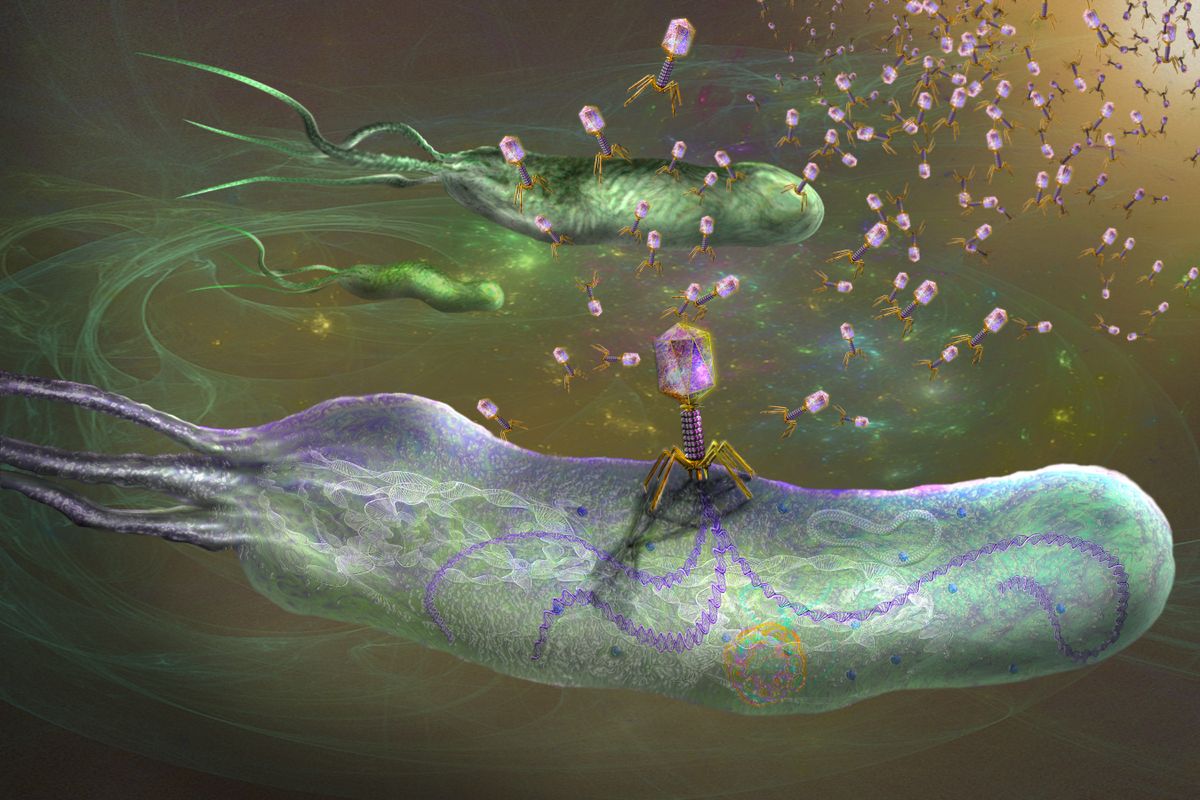
Blueprints of life on our planet are usually written by DNA molecules using a four-letter genetic alphabet. However, some viruses that invade bacteria carry DNA with another letter (Z) that may help them survive. And new research shows that it is much more widespread than previously thought.
A series of new treatises explain how this strange chemical letter infects the virus. DNA , And researchers have demonstrated that the “Z genome” is much more prevalent in bacterial invading viruses around the world — and to help pathogens survive our early hot and harsh conditions. May have evolved Planet ..
The· three Divide the study It was published in the journal Science on Thursday (April 29th).
DNA is most often composed of the same four-letter alphabet of compounds called nucleotides: guanine (G), cytosine (C), thymine (T), adenine (A). The DNA molecule is made up of two strands of these chemicals and is bound in the form of a double helix. The DNA alphabet is the same when coding frogs, humans, or plants by the window, but the steps are different. Molecular RNA uses almost the same alphabet, but uses uracil (U) instead of thymine.
In 1977, a group of Russian scientists found cyanophage, or Virus It breaks into a group of Bacteria It used all of it in place of the chemical 2-aminoadenine (Z), known as cyanobacteria. In other words, the genetic alphabet normally composed of ATCG in most organisms on our planet was ZTCG for these viruses.
For decades, this has been a headache discovery, as strange as spelling the apple “zpples,” and little is known about how this one-letter substitution affected the virus. did not. In the late 1980s, researchers discovered that this Z-nucleotide actually gave the virus some benefits: it was more stable at high temperatures, and one strand of DNA after replication was due to a second strand of DNA. It helped to bind correctly (DNA is double-stranded), and Z-DNA can resist certain proteins that are present in bacteria that normally destroy viral DNA.
Currently, two research groups in France and one research group in China have discovered another piece of the puzzle. How this Z nucleotide reaches the bacteriophage genome. Bacteriophage invade bacteria and use that mechanism to replicate.
Factory Z
All three research groups used a variety of genome technologies to identify some of the pathways leading to the bacteriophage Z-genome.
The first two groups discovered two major proteins known as PurZ and PurB that are involved in the production of Z nucleotides. When a cyanophage injects its DNA into a bacterium and replicates, a series of transformations take place. These two proteins create the precursor Z molecule and then convert the Z precursor molecule to Z nucleotides. It then modifies it so that other proteins can integrate it into the DNA.
The third group identified a DNA polymerase known as DpoZ, an enzyme that assembles new DNA molecules from their parent DNA molecules. They also found that this enzyme specifically eliminates the A nucleotide and instead always adds Z.
For decades, the Z genome has been known to be present in only one species of cyanobacteria. “People believed that this Z-genome was extremely rare,” said Suwen Jao, an assistant professor at the Faculty of Life Science and Technology at Shanghai Technology University and the lead author of a study.
Zhao and her team analyzed phage sequences in the Z genome and compared them to other organisms. They found that the Z genome was actually much more widespread than previously thought. The Z genome was present in over 200 different types of bacteriophage.
Pierre Alexander Kaminsky, a researcher at the Pasteur Institute in France, a senior author of another study, and a co-author of the third study, said that the phage carrying this Z genome is “another life.” You can think of it as a body. ” But “it’s hard to know the exact origin,” he told Live Science that the PurZ protein needs to be investigated for its presence throughout bacteriophage, and perhaps even in living organisms.
Kaminsky and his group analyzed Theory of evolution We have discovered that it is related to the history of the PurZ protein and a protein called PurA found in archaea that synthesize A nucleotides. This “distant” evolutionary link is whether the proteins involved in the production of Z nucleotides were first generated in bacteria and eventually adapted by viruses, or in planetary preliminary life forms, perhaps even intracellularly. , Raises the question of whether it happened more often. Grome and Farren Isaacs of Yale University, who were not part of the study, wrote in a related perspective article that was also published in the journal. Science April 29th.
PurZ and DpoZ are often inherited together. This suggests that the Z genome has existed alongside normal DNA since the early days of life on Earth 3.5 billion years ago. In addition, a 2011 analysis of meteorites that fell to Antarctica in 1969 found Z nucleotides along with some standard and non-standard nucleotides that are likely to be of extraterrestrial origin, “early life forms. The potential role of Z in is increased, “they write.
Future Z
If this Z-genome existed early in the history of our planet, it could have benefited early life forms. “I think Z-genome organisms are better suited to survive the hot, harsh environments of early planets,” Zhao said.
The Z genome is very stable.When two strands of normal DNA combine to form a double helix, two strands hydrogen The bond binds A to T, and the three hydrogen bonds bind G to C. However, if you replace A with Z, three hydrogen bonds will bond them and the bond will be stronger. According to Kaminsky, this is the only abnormal DNA that modifies hydrogen bonds.
However, it is not surprising that the Z genome is not widespread throughout the species today. According to Zhao, the Z genome produces DNA that is very stable but inflexible. Many biological events, such as DNA replication, require the double strand to be thawed, and extra hydrogen bonds make it more difficult to thaw, she said. “I think it’s suitable for hot and harsh environments, but it’s not so comfortable at the moment,” Zhao said.
Nevertheless, the stability of the Z genome is an ideal candidate for a particular technology. Now that researchers know which proteins the virus uses to create these Z genomes, scientists can create them themselves. “Now we can produce the Z genome on a large scale,” says Zhao.
For example, the Z genome may help improve phage therapy. Phage therapy is a method of treating bacterial infections that uses bacteriophage and is usually useful when bacteria develop resistance to antibiotics. Alternatively, according to the Perspective article, it can also be used to improve the longevity and targeting ability of DNA strands used in gene therapy. In addition, according to the Perspective article, researchers can study what happens when the Z genome is integrated into a cell to improve cell function.
However, Zhao said there are still many unanswered questions about the Z genome. For example, she wants to understand if its 3D structure differs from normal DNA, but Kaminsky has this Z genome other than helping bacteriophage evade bacterial defense proteins. I would like to further investigate what benefits the bacteriophage brings to the bacteriophage.
According to the prospect article, it is unclear whether the Z genome can constitute the strands of relative RNA in DNA. It is not even clear if this Z genome integrates into the gene of the viral host of bacteria. What is clear from these studies is that the Z genome is more extensive than we thought it would be, and probably has a very interesting theory of evolution.
Originally published in Live Science.